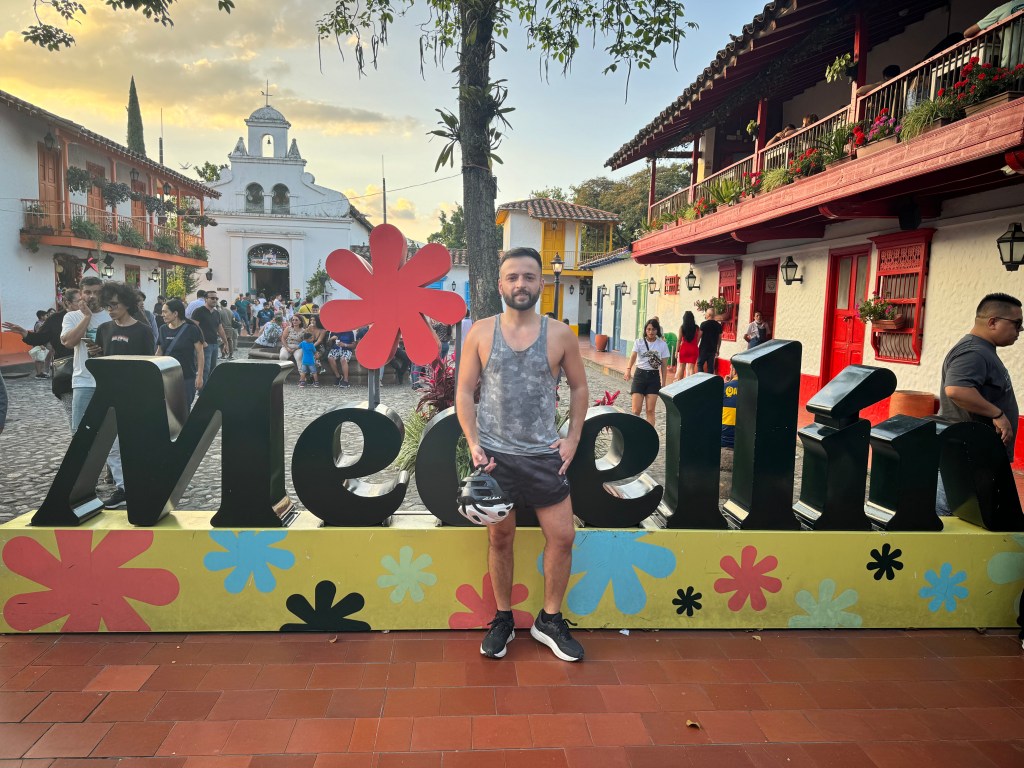
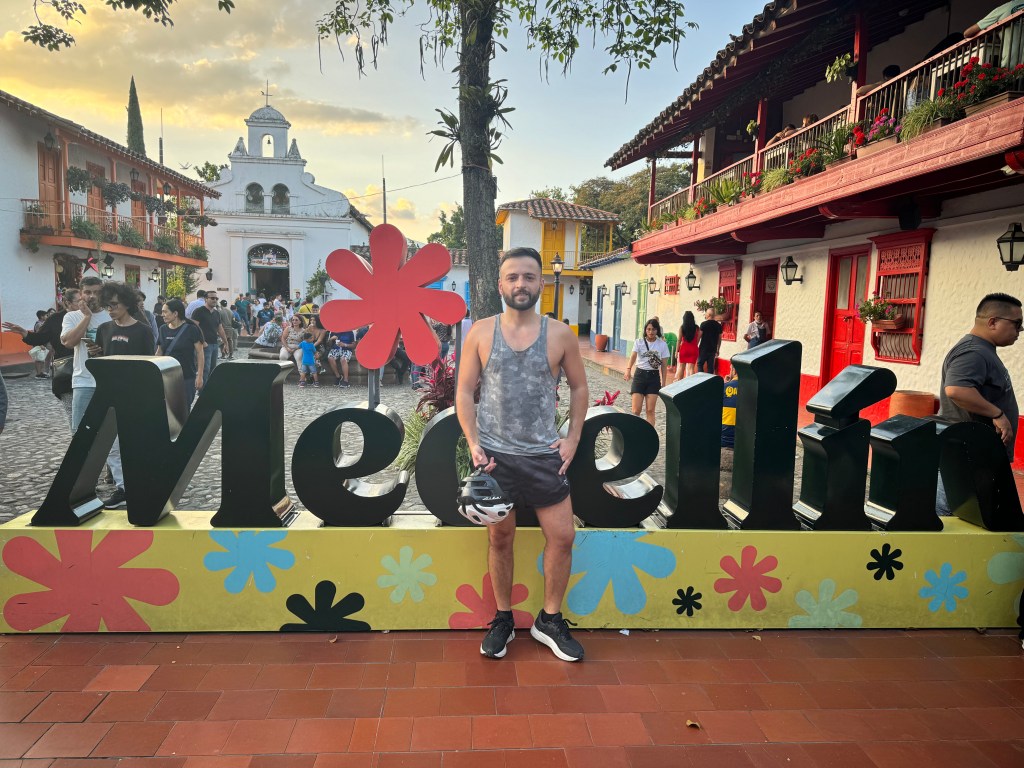
There’s something quietly addictive about Medellín. Maybe it’s the soft hum of the city in the mornings, or the way the mountains wrap around you like a warm, green hug. Or maybe it’s the fact that in this once-infamous Colombian city, I found something I didn’t expect — a place that felt genuinely welcoming to queer travelers like me.
I spent three weeks there in March 2024, mostly to improve my Spanish (20 hours a week at Bacano Spanish School, shoutout to them for making grammar somehow feel like therapy). But what started as a language trip quickly turned into a full-blown love affair with Medellín — its people, its rhythm, and its ever-expanding gay scene.
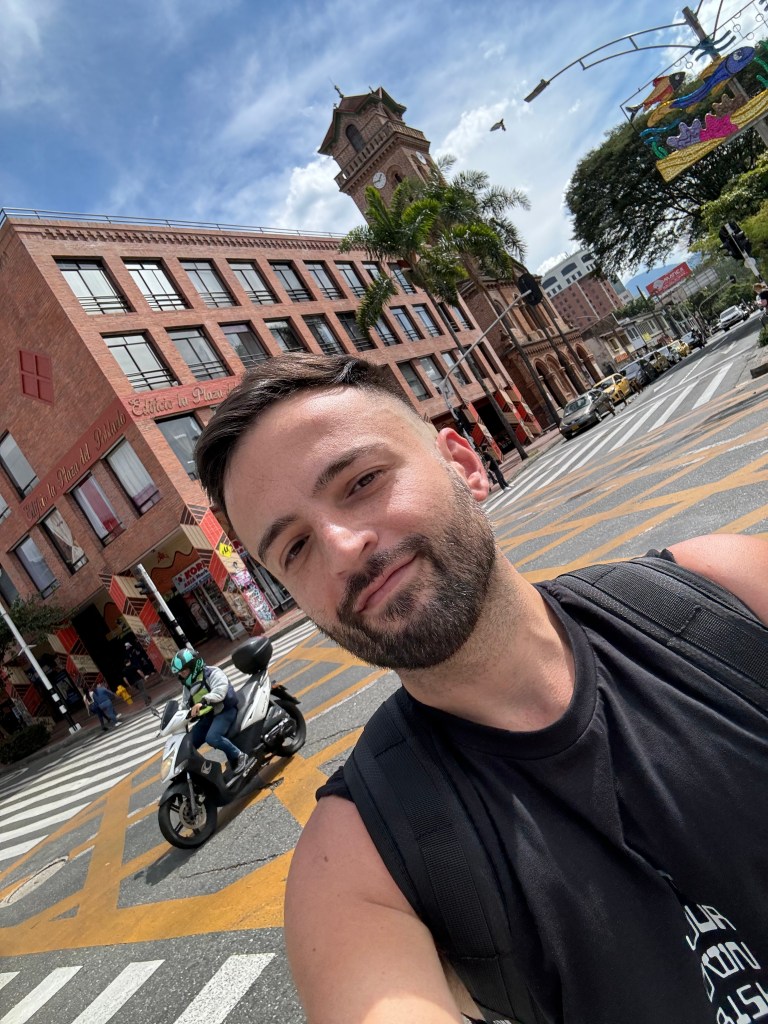
- Learning Spanish, Living Medellín
- My First MrBnb Stay
- Day Trips That Blew Me Away
- Gay Medellín: Where to Go and What to Expect
- The People Make the City
- Café con Cuerpo: The Art of Coffee and Botero
- If You Go
- Final Thoughts
Learning Spanish, Living Medellín
Bacano Spanish School was the perfect anchor for my stay. Located in the leafy El Poblado neighborhood, it drew a mix of travelers — digital nomads, wanderers, and a few who, like me, were trying to string sentences together beyond “una cerveza, por favor.” My teachers were patient and funny, and the classes felt more like cultural exchanges than lessons. By the second week, I was practicing with locals at cafés and ordering empanadas without overthinking verb conjugations.
El Poblado itself became my playground. It’s the city’s polished, cosmopolitan heart, lined with cocktail bars, designer stores, and cafés that could belong in Barcelona or Mexico City. But what I loved most was how open it felt. Rainbow flags peeked from balconies, and no one blinked when I held eye contact (and maybe a little more) with another guy at brunch.
My First MrBnb Stay
I also used MisterBnB for the first time, and it turned out to be one of the best decisions of the trip. I stayed in a cozy apartment in Laureles/Belen are, hosted by a friendly local gay couple who gave me tips on everything from which bar was “not too full of tourists” to which sauna had the best music. MisterBnB felt like the perfect middle ground between local authenticity and community, there’s something comforting about knowing your host gets it without needing to explain anything.
Before I link you to the listing I stayed at (Alejandro, you are amazing!), please use my referral link to sign up for the platform for a $10 credit towards your booking. TIA!
And finally, the listing in question is HERE. ❤
Day Trips That Blew Me Away
On weekends, I traded city life for day trips that reminded me how diverse Colombia is.
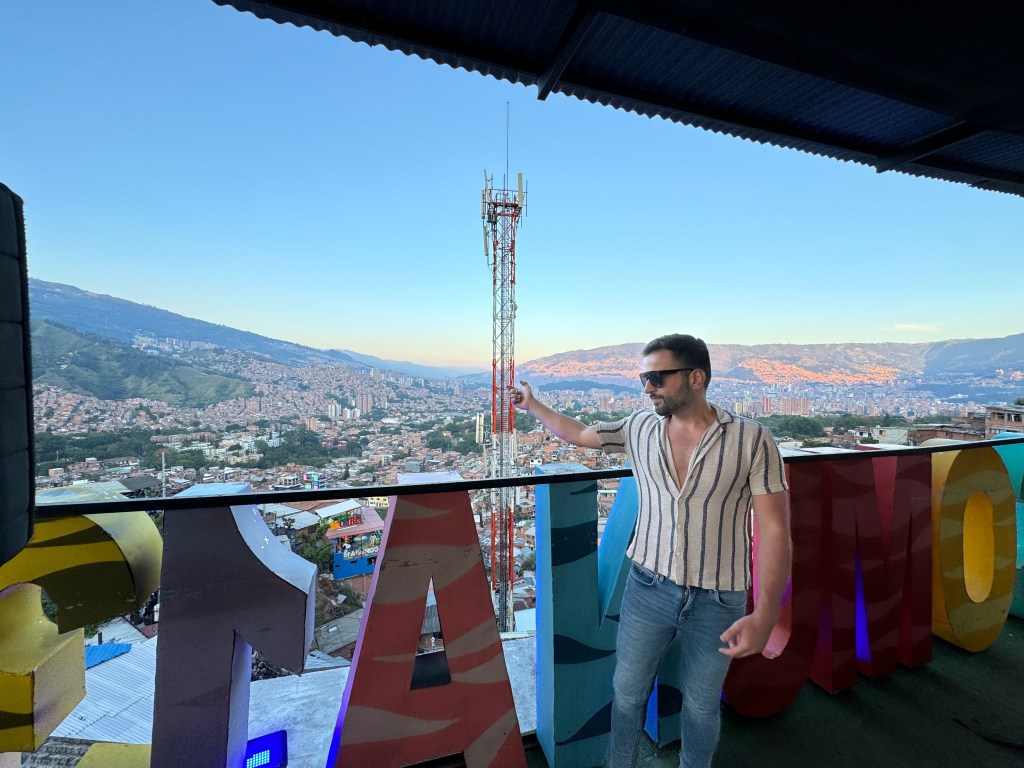
- Comuna 13 was easily one of the most emotional experiences of my travels… Once a no-go zone, now covered in vibrant street art, music, and hope. Walking through it with a local guide, I felt the pulse of transformation and resilience everywhere. I RECOMMEND THIS GRAFFITI & STREET FOOD TOUR of COMUNA 13 that I did if you’re going. Drone video and photography is also included.
- Guatapé, on the other hand, was pure visual candy. Imagine climbing 700 steps up the Rock of El Peñol and being rewarded with a view so surreal you almost forget to take photos. (Almost.) This is the exact tour of Guatape that I joined which was one of the most unforgettable days I spent in Colombia. It includes a visit to Piedra del Peñol with a Boat Tour plus a lunch.
Between classes, I also joined a city walking tour and a food walking tour, both of which gave me a real sense of Medellín’s personality: proud, layered, and constantly reinventing itself.
Gay Medellín: Where to Go and What to Expect
Let’s talk about the gay side of things — because Medellín isn’t just warm in temperature; it’s warm in spirit too.
Nightlife
- Sillón Rouge: Think sexy, dark, and unapologetic — it’s Medellín’s gay cruise bar and it doesn’t try to be anything else. Expect a friendly crowd and a mix of locals and travelers.
- Bar Chiquita (El Poblado): Rainbow cocktails, drag shows, and an atmosphere that feels like someone’s fabulous living room. It’s the place to start your night before things get… louder.
- Industry Club: When you want to dance until 4 AM to reggaeton and electronic beats, this is where it happens.
Saunas
Medellín has a few gay saunas worth exploring. They’re clean, social, and surprisingly friendly. Perfect for those nights when you want to unwind (or not unwind) after class.
Where to Stay
If you’re new to the city:
- El Poblado is the safest and most convenient area, close to nightlife, restaurants, and language schools.
- Laureles gives you a more local vibe — residential, quieter, but still gay-friendly.
The People Make the City
What really makes Medellín stand out isn’t just the bars or views — it’s the people. I met some of the kindest, most open-hearted locals on this trip. From café owners who insisted I try their favorite arepa recipe to a couple at a bar who invited me to their Pride party plans for June, everyone had that Colombian mix of warmth and curiosity.
And despite what outsiders might assume about safety, I felt completely at ease. I walked home late at night, used Uber for longer rides, and never once felt out of place as a gay foreigner. Medellín may not be as loud about its queer identity as Madrid or Berlin, but it wears it proudly — subtly, confidently, and beautifully.
Café con Cuerpo: The Art of Coffee and Botero
You can’t spend three weeks in Medellín and not fall for its coffee — it’s practically a love language here. I’d sit at a corner café after class, sipping single-origin brews that tasted like caramel and citrus, and watch the city’s daily choreography unfold. Coffee in Medellín isn’t just caffeine; it’s a ritual. Locals will tell you where to find the smoothest roasts from Antioquia’s mountains, and somehow those slow moments between sips became as important as the sightseeing itself.
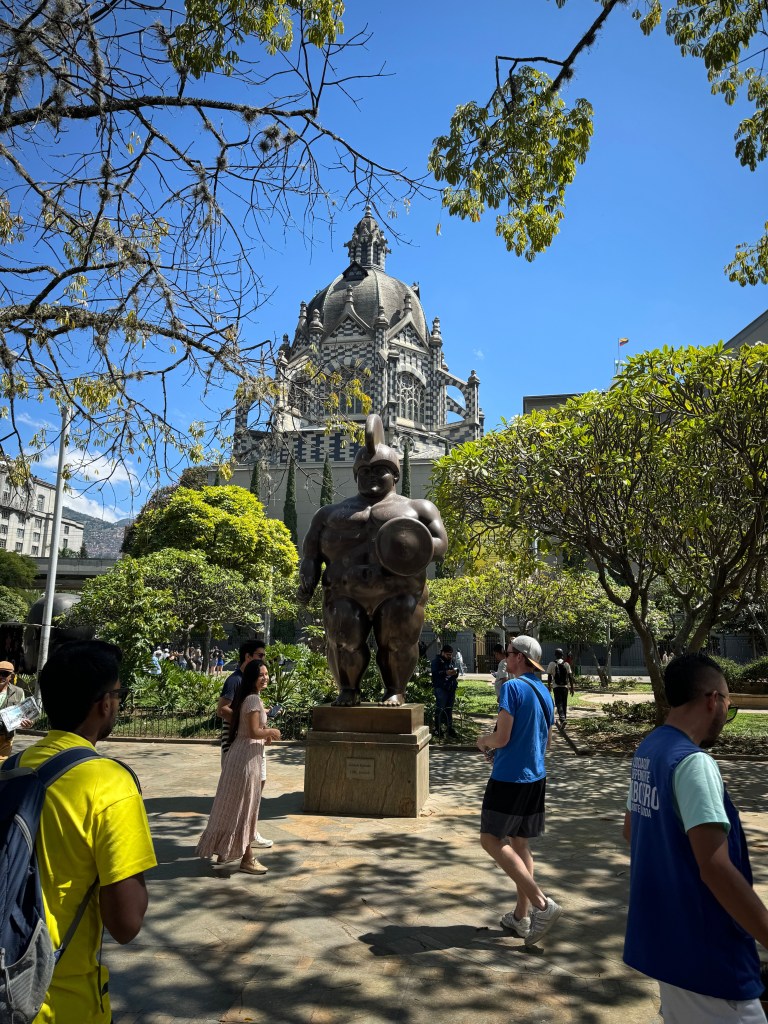
And then there’s Fernando Botero, the city’s most famous son — his voluptuous sculptures are scattered through Plaza Botero, each one a playful reminder that beauty can be bold, exaggerated, and full of character. Standing there among the bronzes, surrounded by locals and tourists snapping selfies, I felt like Medellín itself was winking — proud of its quirks, unafraid of its past, and joyfully owning its curves.
If You Go
- 🏠 Stay: El Poblado for convenience, Laureles for charm.
- 🗣️ Learn: Bacano Spanish School — small classes, local immersion, and genuinely good vibes.
- 🍸 Nightlife: Bar Chiquita, Sillón Rouge, Industry Club.
- 🚶 Do: Walking tours, Comuna 13, Guatapé, food tours.
- 🏳️🌈 Community: Warm, genuine, and open — just be respectful and you’ll be embraced.
Final Thoughts
By the time I left, my Spanish had improved, my heart felt full, and my skin was permanently sun-kissed. Medellín wasn’t just a trip — it was a gentle reminder that queer travelers can find community in the most unexpected places.
I came for the verbs and vocabulary, but I left with friendships, stories, and a city that quietly became one of my favorite corners of Latin America.
 PROUDPASSPORT.COM
Leave a comment