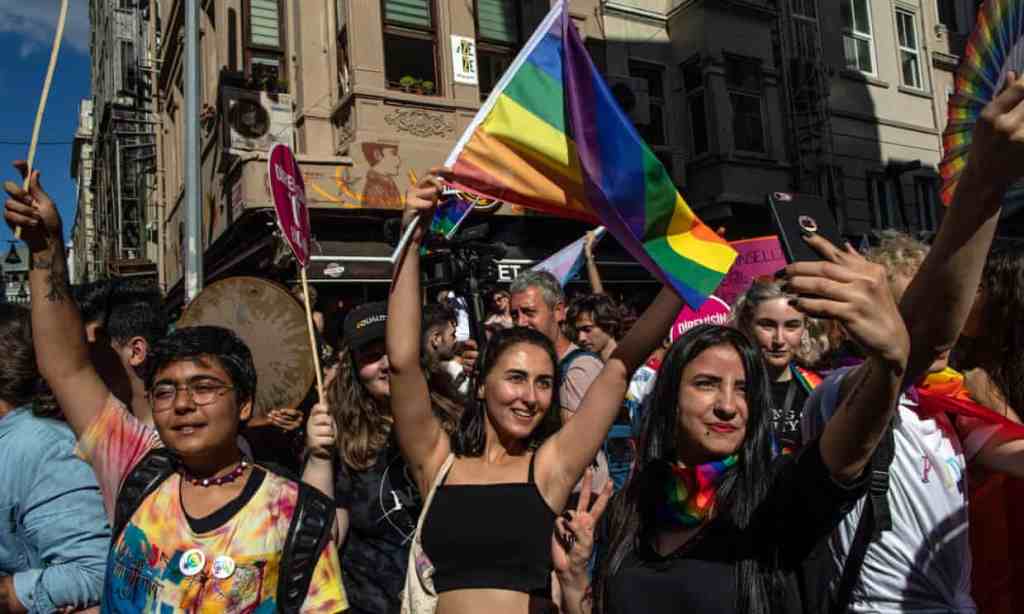
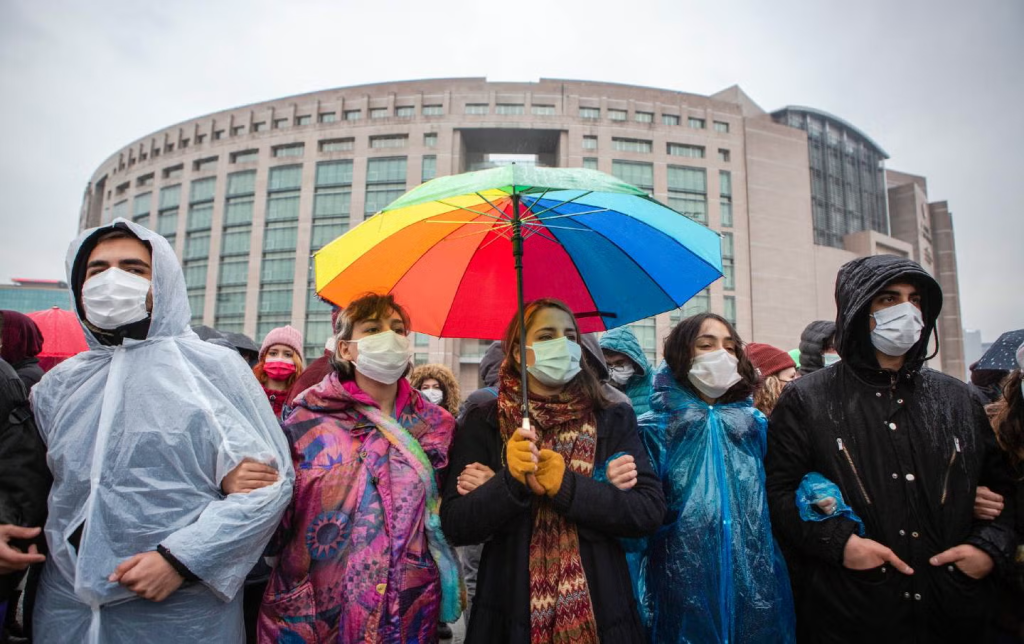
Turkey has never been a country without queer people. So why are LGBTQ+ rights becoming such a political target, and what does it mean for travelers who want to experience the country?
As a Turkish-American gay man who has spent years traveling the world and documenting queer experiences through Proud Passport, I find it increasingly difficult to talk about Turkey without addressing what is happening to its LGBTQ+ community.
I have written about Istanbul’s gay nightlife, explored the Turkish Riviera as a gay couple, and shared the kind of experiences that make Turkey such a fascinating destination for LGBTQ travelers. But in recent years, the political environment has become increasingly hostile toward the LGBTQ+ people. And in 2026, the situation has become particularly concerning.
I don’t believe the explanation is as simple as Turkey being an inherently homophobic society. To understand what is happening, we need to look at the difference between a country’s people, its political leadership, and the role LGBTQ+ people have come to play in political messaging.
Most importantly, we need to understand what this means for queer people who live in Turkey, those who have family there, and travelers who still want to visit.
What’s happening to LGBTQ+ rights in Turkey?
Same-sex sexual activity between consenting adults in private remains legal in Turkey. However, same-sex marriage is not recognized, comprehensive legal protections against discrimination are lacking, and LGBTQ+ people face significant barriers to equality in the govermental settings.
For years, the government has increasingly used rhetoric around traditional family values, national identity, and the protection of children to justify restrictions affecting LGBTQ+ people.
In 2025, Turkey experienced renewed efforts to introduce legislation that could criminalize broadly defined LGBTQ+ expression and advocacy, alongside severe restrictions on gender-affirming healthcare. Those proposals did not become law at that time, but they have resurfaced during 2026. Human Rights Watch reported in June that the government had again circulated proposed amendments that could punish vaguely defined conduct and the promotion of LGBTQ+ identities. The proposals would also impose new restrictions on transgender healthcare.
Then came September 2026.
Between September 12 and 14, police raids targeted LGBTQ+ rights organizations, groups supporting people living with HIV, and bars and nightclubs across several cities, including Istanbul, Ankara, İzmir, Aydın, and Mersin. Human Rights Watch reported that at least 112 people were arrested during the operations, including LGBTQ+ activists and representatives of community organizations. Subsequent arrests and restrictions on online content added to the pressure.
These are not abstract political debates. They affect people who run community organizations, provide health information, create art, organize events, report on LGBTQ+ issues, and simply try to build a life in their own country.
For a community that has spent decades creating spaces for itself, the consequences are serious.
Sources: Human Rights Watch, June 15, 2026 and September 18, 2026.
Is Turkey becoming homophobic?
I think this is the wrong question if we treat Turkish society as one uniform group of people.
Turkey is a country of more than 80 million people, with enormous differences between regions, generations, political views, religious beliefs, social circles, and lifestyles. There is no single Turkish attitude toward homosexuality.
Prejudice absolutely exists. Many LGBTQ+ Turks face family rejection, discrimination, pressure to remain closeted, and concerns about their personal safety. It would be irresponsible to pretend otherwise.
But it would also be wrong to suggest that queer people are somehow foreign to Turkish culture or that LGBTQ+ visibility is a new phenomenon imported from the West.
Queer people have always been part of life in Turkey. Istanbul has a long history of queer social spaces, performers, artists, nightlife, and communities. LGBTQ+ organizations have operated for decades. Drag performers, queer musicians, trans women, gay men, and other LGBTQ+ people have helped shape Turkish cultural life, sometimes publicly and sometimes in spaces where people could find a degree of freedom.
My own experiences traveling in Turkey have shown me how much variation exists in people’s attitudes. I have experienced warmth and hospitality, and I have also seen why discretion can matter. Both realities can exist in the same country. By the way this is also accurate for countries like Brazil, Mexico or the USA, where there is huge diversity between regions and different levels of machismo. Somehow when it’s Turkey, people with a Western lens place the country in the “Middle East” while expecting Western standards in human rights, which is essentially dichotomy rooted in Orientalism.
A person can have conservative religious beliefs without necessarily wanting to police the private lives of their neighbors. Another person may be accepting in everyday life while feeling uncomfortable with public displays of affection. Someone else may be openly supportive of LGBTQ+ rights.
There is no single experience that represents every Turkish person.
What concerns me most is the growing gap between the lives people lead and the image of society that political messaging tries to create.
Why are LGBTQ+ people becoming a political target?
My interpretation is that LGBTQ+ people have become a convenient political scapegoat.
When political leaders repeatedly frame queer people as a threat to children, family life, or national values, they turn a minority into a symbolic enemy. That gives the public a target for anxiety and anger that might otherwise be directed toward more difficult questions about the economy, governance, public services, inequality, or political accountability. This dynamic is similar to what’s happening between MAGA and Trans folks in the USA.
In 2025, the government designated the year as the Year of the Family. Officials used family protection as part of their justification for measures affecting LGBTQ+ people. In 2026, the authorities continued to invoke similar arguments while expanding investigations and enforcement actions against LGBTQ+ organizations.
Human Rights Watch has described this crackdown as part of a broader attack on freedom of expression and association.
That context matters. The restrictions are not happening in isolation. LGBTQ+ activists, journalists, civil society organizations, and other people who challenge official narratives have also faced pressure.
When a government repeatedly presents a minority as a danger to society, it can shift attention away from the decisions and institutions that deserve scrutiny. It can also make discrimination seem like a defense of ordinary people rather than a restriction of their rights.
Another interesting development was the last minute refusal to entry of gay cruise ships to Turkey. This was shocking to all of us as it wasn’t rooted in a long term strategy, and rather a populist response to a viral social media post announcing the arrival of the cruise ship as “perversion” by conservative social media trolls, which the government used as an opportunity to appease to their base. Turkey has been receiving gay cruise ships multiple times a year since the mid 90s and this is the first time something like this happened.
I see that as an important part of what is happening in Turkey.
This doesn’t mean that every person who supports the government’s position is acting cynically, or that every social concern is invented. It means that political leaders are choosing to make LGBTQ+ people a prominent target, and that choice has real consequences for an already vulnerable community.
What should we expect for LGBTQ+ rights in Turkey?
Nobody can predict exactly what will happen next. While at the writing of this article, thing are fairly quiet but there are several developments worth watching.
1. The risk of further legal restrictions
Proposals targeting LGBTQ+ expression and transgender healthcare have resurfaced more than once. Even if a particular proposal is delayed or withdrawn, the repeated attempts create uncertainty for LGBTQ+ people, organizations, and businesses.
The important distinction is that proposals are not the same as enacted law. Travelers and residents should follow confirmed legislative developments rather than assume that every reported proposal has already taken effect.
2. Continued pressure on LGBTQ+ organizations
The September 2026 raids show that the risks extend beyond legislation. Organizations can face investigations, restrictions, arrests, or pressure over their activities and online content.
That matters because community groups often provide essential support, from legal assistance and social connection to health information and advocacy.
3. Restrictions on public visibility
Pride events in Istanbul have been banned repeatedly since 2015, and other cities have imposed restrictions on LGBTQ+ gatherings. Further limits on public events, online expression, or queer cultural activities remain a concern.
4. More uncertainty for transgender people
Transgender people already face significant legal and healthcare barriers. Proposed restrictions on gender-affirming care could make access more difficult and increase the consequences of navigating an already complicated system.
5. Continued resistance from the community
There is another side to this story. LGBTQ+ organizations, activists, lawyers, journalists, artists, and allies continue to document abuses, challenge restrictions, and support one another.
Their work matters, even when progress is slow. Legal challenges, public scrutiny, international solidarity, and the determination of people inside Turkey can all influence what happens next.
I would not promise that the political climate will improve quickly. But neither would I treat the current direction as inevitable or assume that the government speaks for every person in the country.
What does this mean for LGBTQ+ travelers visiting Turkey?
This is where I want to be practical, because I don’t think the answer should automatically be to cancel a trip to Turkey.
Turkey remains a destination with extraordinary history, food, architecture, beaches, and cultural experiences. Turkey is world’s 4th most visited country and that means millions of queers travelers as well. I personally handle dozens of queer visitors to Istanbul through the LGBTQ+ owned medical tourism agency I work for. (Click here for more info) LGBTQ+ travelers can still visit, and many do. But traveling as a queer person requires an understanding of the difference between being able to visit a destination and being able to express your identity there without concern.
Istanbul: a queer scene that still exists
Istanbul remains home to LGBTQ+ social networks, nightlife, and queer-friendly venues. Neighborhoods such as Beyoğlu, Taksim, Cihangir, Karaköy, and Kadıköy have different atmospheres, and the city’s queer scene is more varied than a single list of gay bars might suggest.
However, visibility comes with limitations. Pride marches have faced repeated bans, and the recent crackdown on LGBTQ+ organizations and venues makes it especially important to check current conditions.
Research venues before visiting, check recent local information, and avoid assuming that a venue’s reputation guarantees that every event or gathering will be unaffected by changing circumstances.
Practical advice before you go
- Check current travel advice. Review your government’s latest guidance and local news before departure, particularly if you plan to attend an LGBTQ+ event.
- Research accommodation. Look for recent reviews from same-sex couples and contact a property directly if you have questions about its policies.
- Be thoughtful about public affection. Same-sex relationships are not criminalized in private, but public affection may attract unwanted attention. While bromance and physical contact between straight males is common, it’s is important to be aware of your surroundings. This is a personal safety decision, not an obligation to hide who you are.
- Use dating apps thoughtfully. Avoid sharing identifying details with strangers too quickly, and arrange first meetings in public places.
- Think carefully about demonstrations. Pride marches and solidarity gatherings can face police intervention. Attending an event may carry risks beyond those associated with ordinary tourism.
- Respect your own comfort level. Some travelers are happy to be visibly queer, while others prefer to be more discreet in certain settings. There is no single correct way to travel.
- Remember that residents face different risks. A tourist staying for a week and a Turkish LGBTQ+ activist living under the same political conditions do not necessarily face the same level of exposure.
For current information, I recommend checking the US State Department’s Turkey travel advisory and Human Rights Watch’s reporting on Turkey. Conditions can change, so revisit these sources close to your departure date.
Should LGBTQ+ travelers boycott Turkey?
I don’t think there is one answer that works for everyone. Boycotting certain countries requires a certain level of passport a privilege. For a queer person with an Iranian or Iraqi passport, Istanbul is as a major gay hub where they can visit and be themselves without the fear of prosecution, as travelers with weaker passports don’t have the luxury of boycotting Turkey since getting a Schengen visa is a serious barrier in front of them.
Some travelers may decide that the current political climate makes Turkey a destination they don’t want to support financially. Others may want to continue visiting family, exploring the country, or connecting with its queer community.
Both decisions deserve respect.
What I would encourage is a more informed approach to travel. Support LGBTQ+-friendly businesses where possible. Listen to local queer voices. Avoid treating Turkey’s LGBTQ+ community as a tourist attraction. Don’t confuse a country’s political leadership with every person who lives there. And if you visit, remember that your experience as a foreign traveler may be very different from the experiences of the queer people who call Turkey home. Travel can create connections and visibility, but it should never come at the expense of the people whose lives are affected by the political climate.
A hopeful future for queer Turkey
I want to end with something I think gets lost in conversations about LGBTQ+ rights in Turkey.
The Turkish queer community did not appear because a government allowed it to exist. It did not disappear when Pride marches were banned. And it will not stop being part of Turkish society because politicians decide to make it a target.
Queer people are part of Turkey’s past, present, and future. They are our friends, relatives, colleagues, artists, business owners, neighbors, and partners. They are people building lives, creating communities, falling in love, raising families, and imagining a better future.
The country I know is more complicated than the political image presented by its leadership. It is a place where conservative traditions coexist with modern lifestyles, where people disagree about politics, where hospitality is deeply valued, and where queer people continue to find ways to connect with one another.
That doesn’t erase the discrimination or make the current crackdown any less serious. Hope should never be used to minimize what people are going through.
But I also refuse to believe that today’s political climate tells us everything about what Turkey can become.
My hope is for a Turkey where a gay couple can explore Kaş, hold hands in Istanbul, enjoy a night out, or visit their family without having to calculate the consequences of being seen. A Turkey where transgender people can access the healthcare they need, queer organizations can operate freely, and Pride is treated as an expression of citizenship rather than a threat.
Until then, I will continue to tell the stories that deserve to be told: the beautiful parts of Turkey, the complicated parts, the queer people who make it what it is, and the realities travelers need to understand before they arrive.
Because loving a country doesn’t mean pretending it has no problems. And criticizing its government doesn’t mean giving up on its people.
Turkey has always had a queer community. The challenge now is not whether queer people belong there. They already do. The challenge is whether the country will allow them to live openly, safely, and equally.
I believe that future is worth working toward.
Written for Proud Passport, from the perspective of a Turkish-American gay traveler. This article reflects my personal perspective alongside documented developments as of October 2026. Legislative proposals and travel conditions can change.
Gay travel in Turkey, LGBTQ travel Turkey, Is Turkey safe for gay travelers, Turkey LGBTQ+ rights, Gay Turkish-American perspective, Queer travel in Turkey, LGBTQ+ travelers in Istanbul, LGBTQ+ safety in Turkey


Leave a Reply