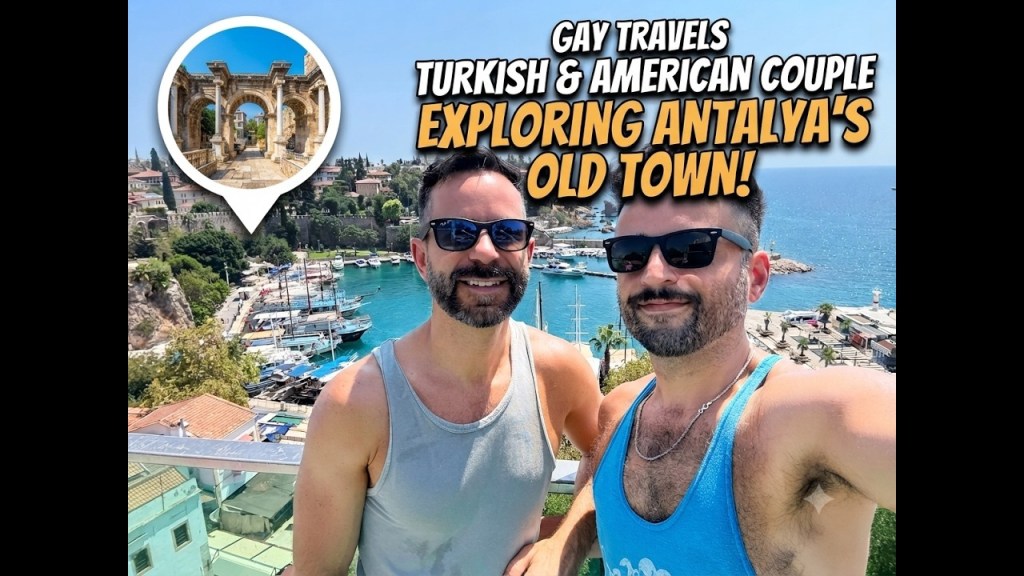
(Travel Date: September 2025)
Exploring Antalya with my “now ex”, from the cobblestone streets of Kaleiçi to the turquoise waters of Konyaaltı Beach, with a little history, local food, and gay travel along the way.
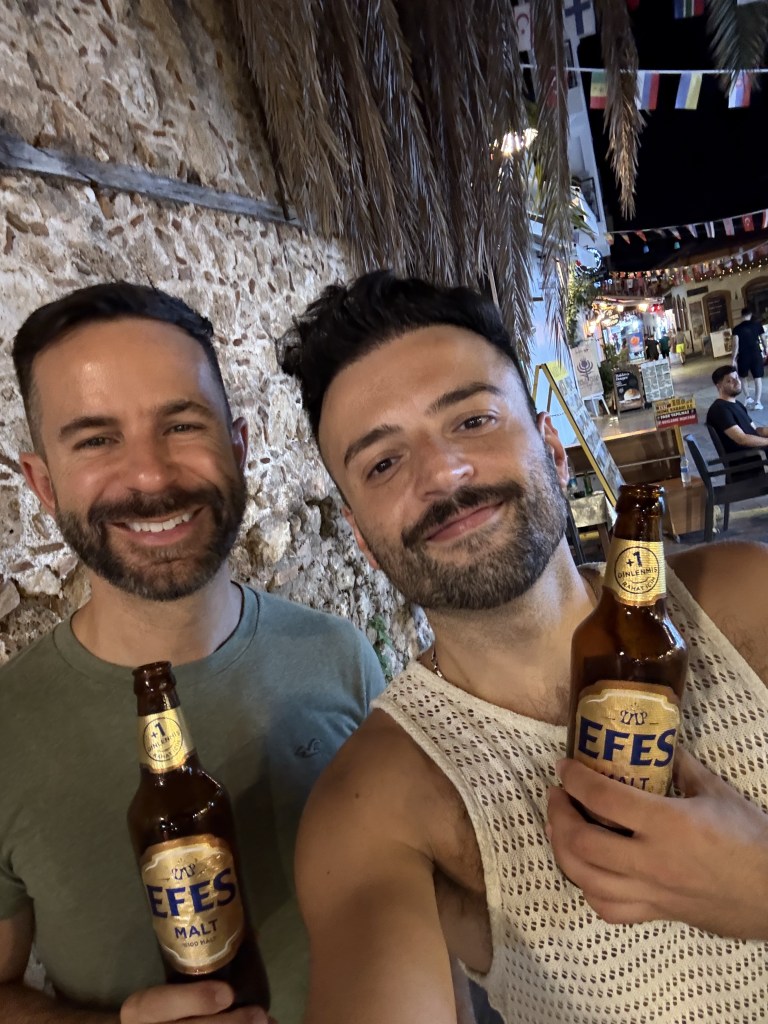
Antalya is one of Turkey’s most popular summer destinations, but there’s much more to this Mediterranean city than all-inclusive resorts and beach holidays. During our trip, my ex and I spent just under 48 hours exploring its historic old town, relaxing by the sea, discovering local cafés, and getting a feel for everyday life in a city that blends thousands of years of history with a laid-back coastal atmosphere.
As a Turkish-American gay couple traveling together, we also wanted to understand what visiting Antalya would feel like as two men in a same-sex relationship. From communicating with our accommodation before arrival to exploring the city’s nightlife options, this trip was a chance to experience Antalya from both a travel and LGBTQ+ perspective.
We barely scratched the surface, but here’s what we discovered.
First Impressions: Antalya After Dark
Our journey began with a flight from Dublin to Antalya, and we arrived excited to explore a part of Turkey that feels quite different from Istanbul.
One thing we did before arriving was contact our accommodation to let them know we were a same-sex couple. It’s something LGBTQ+ travelers may want to consider when visiting destinations where attitudes toward homosexuality can vary. We wanted to make sure everyone was comfortable and that we could enjoy our stay without unnecessary surprises.
Our first evening was spent wandering around Antalya’s harbor and old town. The area had a lively atmosphere, with street musicians, people dancing, and visitors filling the narrow streets. The harbor was particularly beautiful at night, with boats resting in the water and historic buildings surrounding the waterfront.
There was something immediately appealing about Antalya. It felt like a place where you could spend the evening walking without a strict itinerary, stopping for a drink, enjoying the scenery, and simply watching local life unfold.
Exploring Kaleiçi, Antalya’s Historic Old Town
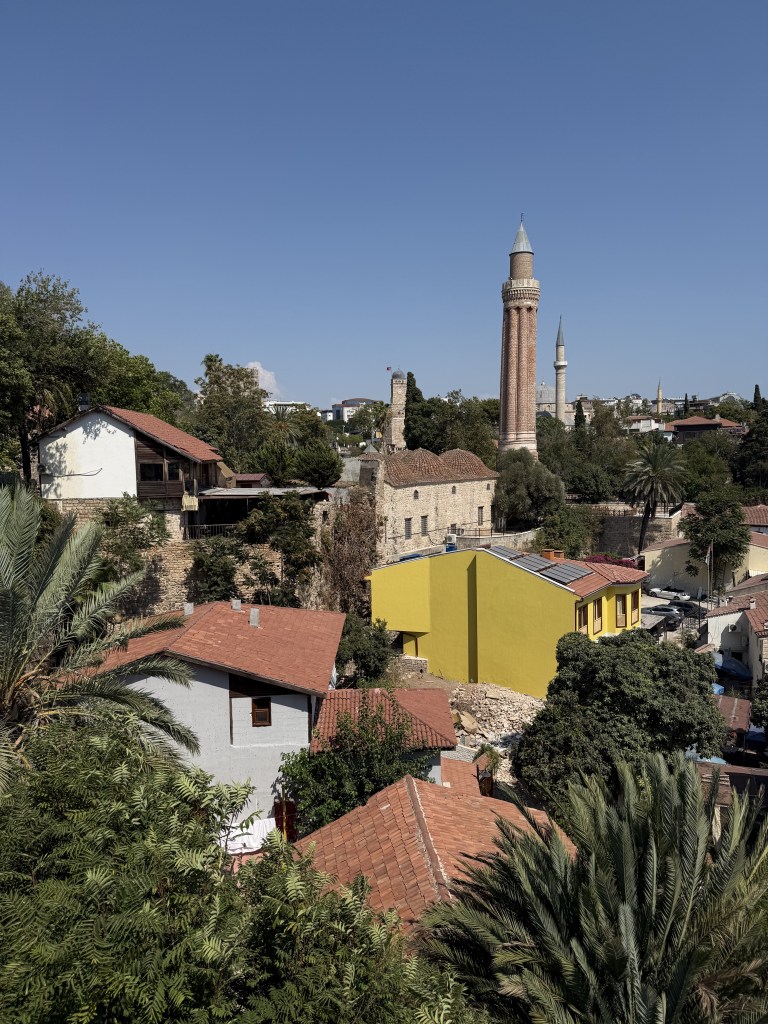
The next morning, we headed into Kaleiçi, Antalya’s historic old town. The name roughly translates to “inside the castle,” and the neighborhood is one of the city’s most atmospheric areas.
Its narrow streets are lined with traditional Ottoman-era houses, boutique hotels, cafés, small shops, and historic buildings. Some streets open onto unexpected views of the Mediterranean, while others lead toward the old harbor.
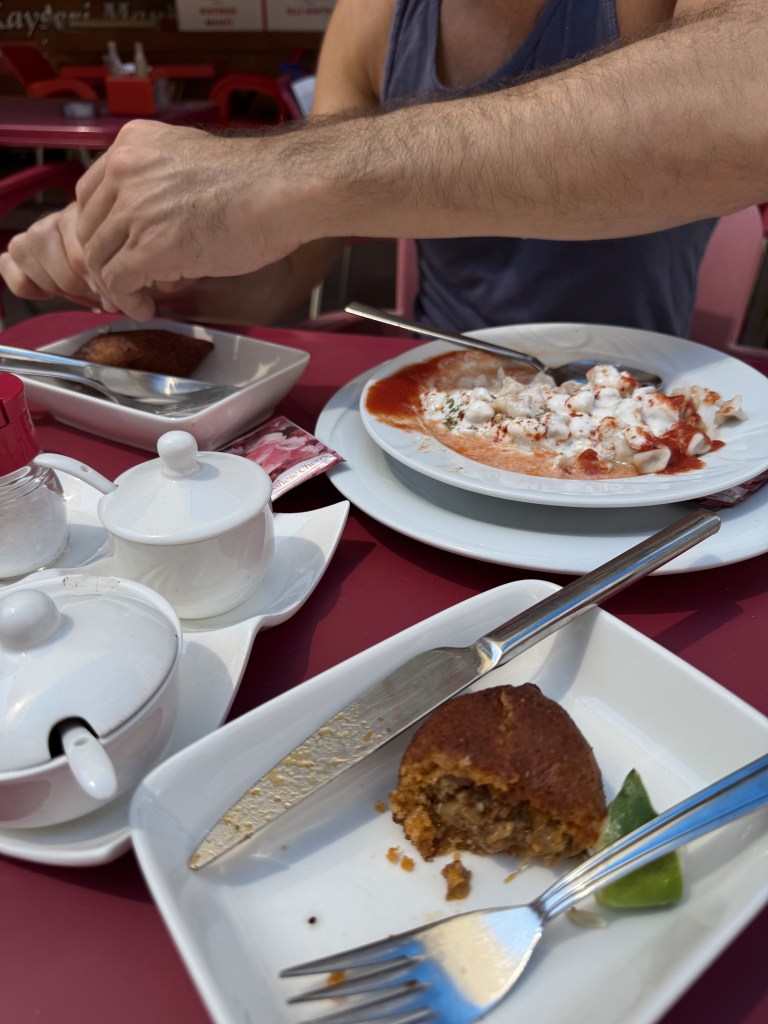
We stopped for breakfast at Luna Cafe, where we enjoyed Turkish breakfast favorites and the company of a few neighborhood cats. If you’ve spent time in Turkey, you already know that cats are practically part of the country’s hospitality industry!
Kaleiçi is the kind of place where getting lost is part of the experience. Rather than rushing between landmarks, I recommend taking your time, exploring the side streets, and stopping whenever something catches your attention.
It’s also a great area for photographs, whether you’re interested in architecture, colorful doorways, traditional houses, or the contrast between the historic streets and the blue Mediterranean in the distance.
For couples, it’s an especially lovely place to spend a relaxed morning before heading to the beach.
Konyaaltı Beach: A Mediterranean Escape Close to the City
One of the things I appreciated most about Antalya was how easy it was to combine city sightseeing with beach time.
We visited Konyaaltı Beach, one of Antalya’s best-known stretches of coastline. Unlike sandy beaches in some Mediterranean destinations, this beach is largely covered in pebbles, so water shoes can be useful if you’re sensitive to walking on stones.
The water was beautiful, and the surrounding mountains made the scenery even more impressive. There’s also a long promenade where you can walk, cycle, stop for a coffee, or spend time at one of the many restaurants and bars.
We discovered U1 Coffee, a local coffee spot with panoramic views of the beach and mountains. One of the highlights was how affordable the experience was. At around €2 for a coffee during our visit, it was a reminder that you don’t always need to spend a fortune to enjoy a spectacular view.
If you prefer a more organized beach experience, there are private beach clubs with different prices and amenities. Otherwise, you can enjoy the public beach and promenade without committing to a full beach-club day.
For gay travelers, Konyaaltı is worth visiting for its scenery and relaxed atmosphere, although I wouldn’t describe the entire beach as a specifically gay beach. It’s a popular public destination for locals and tourists alike.
Sunset at Düden Park
After spending time by the sea, we headed to Düden Park for sunset.
The park offers a completely different perspective on Antalya, with its dramatic coastal setting and waterfalls plunging toward the Mediterranean. It’s a refreshing change from the busier beach promenade and a lovely place to slow down after a day of sightseeing.
The sound of the water, the sea views, and the changing colors of the sky make this a particularly rewarding stop toward the end of the day.
We also passed through parts of the Lara area, where the coastline becomes more dramatic, with cliffs, small coves, and views of local fishing activity.
One of Antalya’s biggest advantages is this variety. Within a relatively short distance, you can move from a lively beach to a peaceful park, from a historic neighborhood to a modern shopping street, and from crowded tourist areas to quieter coastal viewpoints.
Hadrian’s Gate and the Layers of Antalya’s History
The following day, we returned to the city center to explore more of Antalya’s historical side.
One of the major landmarks is Hadrian’s Gate, a monumental Roman gateway built to honor Emperor Hadrian’s visit in the second century AD. Standing beneath its arches is a reminder of just how long this part of the Mediterranean has been a crossroads of civilizations.
Antalya’s history stretches back more than two millennia. The city and surrounding region have been shaped by Greek and Roman settlements, the Byzantine Empire, the Seljuks, and the Ottomans.
You can see traces of these different periods in its architecture, historic streets, religious buildings, and surviving monuments.
We also walked along Atatürk Avenue and explored some of the more modern parts of the city. This contrast is part of what makes Antalya interesting. It isn’t simply a preserved historic destination; it’s a working city where modern Turkish life unfolds alongside ancient landmarks.
We even stumbled upon a local vegan meal during our walk, another reminder that some of the best travel discoveries happen when you aren’t following a carefully planned itinerary.
If you enjoy history, architecture, and walking tours, Antalya deserves more than a quick stop between flights or a few days confined to a resort.
Getting Around Antalya by Tram
We also took a ride on Antalya’s tram system, which was one of the more enjoyable ways to experience the city.
The tram connects important areas and offers a practical alternative to relying entirely on taxis. Depending on your route, it can make getting between central sightseeing areas, transport hubs, and beach destinations much easier.
I particularly enjoyed the contrast between riding modern public transportation and walking through streets that have existed in some form for centuries. Antalya manages to feel both historic and contemporary without losing its Mediterranean character.
If you’re planning a visit, check the current tram routes and stops before traveling, as the most convenient connection will depend on where you’re staying and which part of the city you want to visit.
Is Antalya Gay-Friendly?
This is an important question for anyone considering a trip to Turkey as an LGBTQ+ traveler.
Our experience in Antalya was positive, and we were able to explore the city together, enjoy meals, visit public attractions, and experience its coastal lifestyle. We also contacted our accommodation before arrival to establish expectations and make sure we felt comfortable staying there as a couple.
However, it’s important to distinguish between having a positive personal experience and describing an entire destination as universally gay-friendly.
Turkey does not recognize same-sex marriage, and LGBTQ+ people can encounter different attitudes depending on the setting. Antalya is a major international tourism destination, but that doesn’t mean every venue or situation will feel equally welcoming.
My advice is to research accommodation carefully, communicate with hosts if you have concerns, and look for recent information from LGBTQ+ travelers when choosing nightlife venues.
Antalya also has a gay nightlife scene. Pose is a name to look into if you’re interested in gay bars, but check its current operating status, events, and opening hours before planning your evening. We didn’t have enough time on this trip to explore the local gay scene properly, so that’s something I’d like to do on a future visit.
For LGBTQ+ travelers, the goal isn’t to approach every destination with fear, but to travel with realistic expectations and enough information to make choices that feel right for you.
What We Missed: Gay Nightlife and a Sunset Cruise
Although we had a great time, less than 48 hours simply wasn’t enough.
We would have loved to explore more of Antalya’s gay nightlife, including checking out local bars including the famous Poser Bar, drag events, and taking a sunset cruise along the coast. There is also known gay cruising in the city center at a park which we didn’t get to experience 🙂 (DM me for info)
These are two experiences I’d add to a longer itinerary, alongside more time for the old town, local restaurants, and beaches.
Antalya is also an excellent starting point for exploring Turkey’s Mediterranean coastline. Our next destination was Kaş, a town we’d been looking forward to visiting for its turquoise waters, relaxed atmosphere, and beautiful coastal scenery.
That part of the trip deserves its own story.
How Long Should You Spend in Antalya?
Our short stay was enough to see some of the main highlights, but I’d recommend at least three to four days if you want a more relaxed city break. A week would be even better if you want to include day trips, beach clubs, boat excursions, and a deeper exploration of the surrounding region.
Here’s a simple itinerary to help you plan:
Day 1: Old Town and the Harbor
- Explore Kaleiçi and its historic streets.
- Visit Hadrian’s Gate.
- Enjoy a Turkish breakfast at a local café.
- Spend the evening around the old harbor.
Day 2: Beach and Sunset
- Spend the morning at Konyaaltı Beach.
- Stop for coffee with a view at U1 Coffee.
- Explore the promenade and nearby restaurants.
- Visit Düden Park for sunset.
Day 3: Local Life and Coastal Exploration
- Explore more of central Antalya and Atatürk Avenue.
- Take the tram to discover other parts of the city.
- Visit additional historical or cultural attractions.
- Research current LGBTQ+ nightlife options for an evening out.
Days 4–7: Slow Down and Explore Further
- Add a boat trip or sunset cruise.
- Spend more time at the beach.
- Explore the Lara coastline and other nearby attractions.
- Consider extending your trip along the coast toward destinations such as Kaş.
Final Thoughts: Would I Return to Antalya?
Absolutely. Even though our visit was brief, Antalya left a positive impression.
I loved the combination of historical architecture, Mediterranean scenery, affordable cafés, and the ability to move between the city and the coast so easily. Not every part of the modern city center was particularly inspiring architecturally, but the historic neighborhoods and natural surroundings more than made up for it.
Traveling here with my ex also gave us a chance to experience a different side of Turkey together. As a Turkish-American gay traveler, I’m always interested in how destinations balance local culture, tourism, and LGBTQ+ experiences. Antalya gave us plenty to explore, even if we didn’t have time to investigate its queer nightlife in depth.
Would I recommend it to gay travelers? Yes, with the same practical preparation I’d suggest for visiting Turkey more generally. Research your accommodation, check current information about LGBTQ+ venues, and remember that individual experiences can vary.
Most importantly, don’t limit your Antalya trip to a hotel pool or an all-inclusive resort. Walk through Kaleiçi, eat somewhere local, take the tram, spend an afternoon by the Mediterranean, and watch the sunset near the waterfalls.
Antalya has a lot more to offer than you might expect.
And next time, I’m staying longer.
Planning your own trip to Turkey? Follow along for more LGBTQ+ travel stories, practical destination guides, and honest experiences exploring the world as a gay traveler.


Leave a Reply