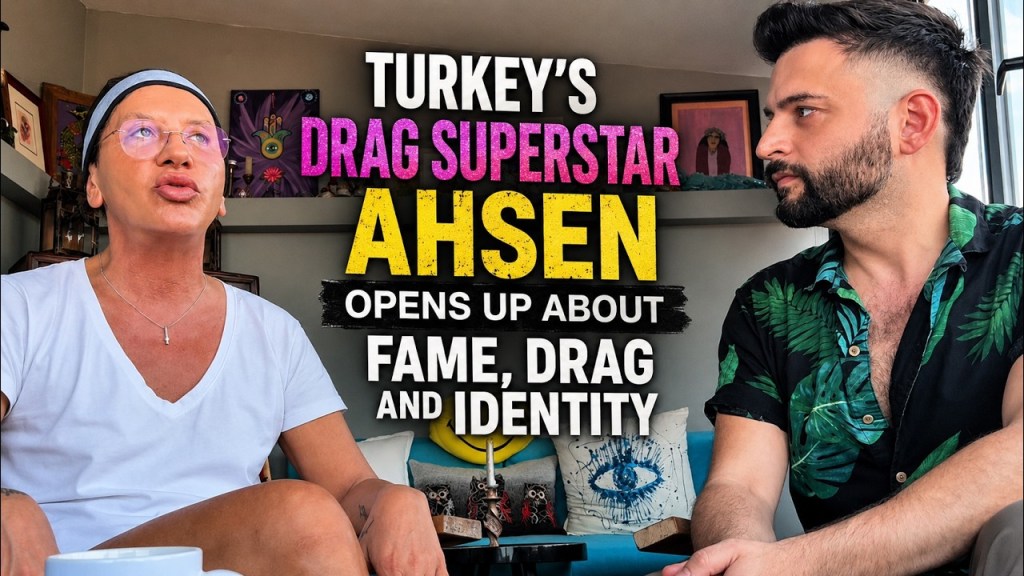
From Istanbul’s nightlife to the stage at Cahide Palazzo, drag queen Ahsen Gönülce has spent years building a career in a country where queer culture is visible, vibrant, and often forced to remain out of sight.
When people think about drag, American television shows such as RuPaul’s Drag Race might be the first thing that comes to mind. But drag has a much broader history, with different traditions, artistic influences, and cultural meanings around the world.
Turkey is no exception.
In my latest conversation, I explore the world of Turkish drag through the experiences of Ahsen Gönülce, one of the country’s pioneering drag performers. We discuss her artistic journey, the realities of working in Turkey’s queer nightlife, the challenges facing LGBTQ+ visibility, and the places travelers should consider when exploring Turkey’s queer culture.
Her story offers a fascinating look at an artistic community that continues to create, perform, and reinvent itself despite significant restrictions.
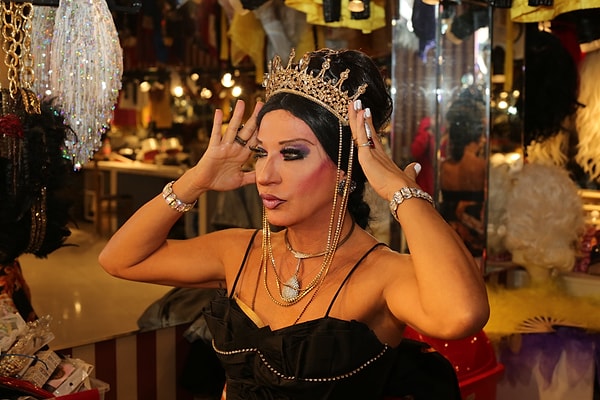
Who is Ahsen Gönülce?
Ahsen Gönülce was born in Ankara and educated at Ankara High Girls’ College before beginning her professional journey in Istanbul.
Her career started in nightlife, where she worked as a bartender, but her interest in performance eventually led her to the theater. Through her experience with Ali Poyrazoğlu Theatre, she developed her performance skills and explored puppetry, adding new dimensions to her artistic background.
Her introduction to drag came through influential figures, including Huysuz Bey and Birol Can Özdemir. Over time, she developed a style influenced by legendary performers and entertainers such as Marilyn Monroe, Madonna, and Liza Minnelli.
What makes Ahsen’s approach particularly interesting is her emphasis on originality. Rather than simply copying international drag trends, she believes performers should develop their own identities, understand their craft, and continue evolving as artists.
For her, drag is more than makeup, costumes, or a glamorous stage persona. It requires discipline, preparation, creativity, and a willingness to keep learning.
Turkish drag is more than what you see on American television
The international popularity of RuPaul’s Drag Race has introduced millions of people to drag, but it has also shaped expectations about what drag should look like.
Ahsen challenges the idea that one television format can represent an entire art form.
Drag traditions vary significantly between countries and communities. The performance styles, cultural references, humor, music, and social realities that shape Turkish drag are not necessarily the same as those found in New York, London, or Los Angeles.
Turkey has its own performance traditions and nightlife history. Understanding its drag scene requires looking beyond international trends and appreciating the people who have developed the art form locally.
That distinction matters for queer travelers, too. Experiencing drag in Istanbul is not simply about finding a Turkish version of an American show. It is an opportunity to encounter a distinct cultural expression shaped by the country’s own history, politics, and social environment.
The paradox of being queer in Turkey
One of the most striking themes in our conversation is the contradiction surrounding LGBTQ+ visibility in Turkey.
Queer people have long been part of Turkish urban life, particularly in cities such as Istanbul and İzmir. LGBTQ+ communities, performers, artists, and nightlife venues have created spaces where people can socialize, express themselves, and build relationships.
Yet being known to exist is not the same as being accepted in public life.
Ahsen describes a social environment in which queer people may be tolerated as long as they remain relatively invisible. People might know about LGBTQ+ communities and attend queer-friendly entertainment, while public demonstrations of queer identity can still provoke opposition.
This creates a difficult balancing act. Queer culture exists, but the freedom to express it openly is far from guaranteed.
Restrictions on Pride events and concerns about police intervention have also affected public LGBTQ+ gatherings and performances. For drag artists, this can mean working within a nightlife environment that offers opportunities for creative expression while limiting the possibility of taking that expression into larger public spaces.
Ahsen dreams of staging a major, professionally produced drag event on İstiklal Street in Istanbul. Such an event would represent more than an extravagant performance. It would be a statement about drag as an art form and its place in the city’s cultural life.
The ambition captures the tension at the heart of Turkish drag: a desire to be seen, celebrated, and recognized, even when the surrounding environment makes visibility complicated.
Inside Cahide Palazzo, one of Turkey’s best-known drag venues
For a closer look at Turkish drag, Cahide Palazzo is an important name to know.
Located in Istanbul, the venue combines drag performances, live music, dining, and nightlife in an elaborate entertainment setting. It is known for its high production standards and for bringing together different elements of Turkish show business.
Ahsen is part of the professional entertainment environment there, where performances require far more than stepping onto a stage in a beautiful costume.
Shows can begin in the early evening and continue well past midnight. Performers must maintain their energy and professionalism throughout long nights, often in front of audiences who are drinking and socializing.
Behind the glamour is a demanding job involving preparation, timing, rehearsals, stage presence, and the ability to respond to an audience in real time.
Cahide Palazzo also illustrates the importance of venues that provide space for queer cultural expression. In an environment where public events may face restrictions, established nightlife spaces can become particularly significant places for performers and audiences to connect.
For visitors interested in Turkish drag, experiencing a show can offer a window into a local entertainment tradition that international LGBTQ+ media rarely covers in depth.
As with any venue, travelers should check current programming, access policies, and the atmosphere before visiting.
Why professionalism and reinvention matter in drag
Ahsen has built her career around a belief that talent alone is not enough.
Long-term success requires hard work, originality, and continuous self-education. Performers need to understand their craft, develop new skills, and find ways to keep their work relevant without losing their artistic identity.
She also reflects on the generational differences between established performers and younger artists who may rely heavily on social media trends.
Social media can introduce new audiences to drag and create opportunities for emerging performers. But online visibility does not automatically translate into stagecraft, discipline, or the ability to sustain a professional career.
Ahsen’s perspective is a reminder that drag is an art form with its own skills and traditions. Behind a successful performance are years of experience, experimentation, and learning.
Her story also highlights the importance of mentorship. Established performers can pass their knowledge to younger generations, helping ensure that local drag culture continues to evolve rather than simply follow international trends.
A book that helps preserve Turkish drag history
Another important part of Ahsen’s journey is her recently published memoir, which she describes as a pioneering contribution to Turkish drag literature.
Writing a personal history is particularly meaningful in a cultural environment where queer experiences may be underrepresented in mainstream narratives.
A memoir can preserve memories that might otherwise be lost, document the struggles behind an artistic career, and offer encouragement to people who feel marginalized or uncertain about their futures.
Ahsen’s emphasis on legacy goes beyond fame or physical appearance. She believes a meaningful career should leave something behind through artistic contribution, resilience, and the opportunities created for others.
That message extends beyond drag. For anyone building a life or career in an environment that does not always make things easy, there is value in creating something that outlasts individual success.
Is Turkey LGBTQ+ friendly? The answer is complicated.
For LGBTQ+ travelers, Turkey cannot be reduced to a simple yes-or-no answer.
The experience can differ considerably depending on the destination, the setting, the people you meet, and how openly you express your identity.
Istanbul offers an enormous range of historical sites, restaurants, cultural experiences, and nightlife. İzmir and parts of the Aegean coast have reputations for more relaxed social atmospheres. Summer destinations such as Bodrum and Alaçatı-Çeşme can also attract queer travelers looking for a combination of beaches, nightlife, and social life.
At the same time, restrictions on LGBTQ+ public events and broader social and political pressures mean travelers should not assume that every environment is equally welcoming.
Ahsen’s experiences also challenge simplistic assumptions about more conservative parts of Turkey. Hospitality can be warm and generous in places that outsiders might not expect, particularly when visitors approach local communities respectfully and take an interest in their history and culture.
That does not mean every destination is equally safe or that local attitudes are uniform. It means that Turkey is a diverse country, and understanding it requires more than relying on stereotypes.
Where should LGBTQ+ travelers go in Turkey?
Here are several destinations worth considering when planning a queer-friendly trip.
İstanbul
Istanbul combines historic landmarks, contemporary art, restaurants, and a long-established queer nightlife scene. It is an excellent starting point for travelers who want to understand the many different sides of Turkish culture. Research current venue information and local guidance before planning nightlife outings.
İzmir
İzmir is known for its comparatively relaxed atmosphere and coastal lifestyle. It offers a mix of urban culture, food, waterfront promenades, and access to nearby Aegean destinations.
Alaçatı and Çeşme
These neighboring destinations are popular for summer holidays, beach clubs, restaurants, and nightlife. They are particularly appealing to travelers looking for an Aegean escape with a stylish holiday atmosphere.
Bodrum
Bodrum combines beaches, resorts, nightlife, and a lively summer social scene. It can be a good option for travelers who want a coastal holiday with plenty of opportunities to dine, socialize, and explore.
Southeastern Turkey: Gaziantep, Mardin, and Şanlıurfa
For travelers interested in history, architecture, food, and cultural diversity, southeastern Turkey offers a very different experience from the country’s major coastal destinations.
Gaziantep is renowned for its culinary traditions, while Mardin is known for its historic architecture and distinctive cultural heritage. Şanlıurfa offers important historical and religious sites.
These destinations are not established queer holiday hubs in the same way as parts of Istanbul or the Aegean coast. LGBTQ+ travelers should approach them with greater attention to local norms, discretion, and current safety advice. A knowledgeable local guide can help visitors navigate cultural sensitivities while discovering the region’s remarkable heritage.
Seeing Turkey beyond the stereotypes
One of the reasons I wanted to explore this conversation is that Turkey is often discussed in extremes.
Depending on who is speaking, the country may be portrayed as entirely liberal or entirely conservative, completely welcoming or impossible for queer people to navigate.
The reality is much more complex.
Turkey has a rich history of artistic expression, urban queer communities, and nightlife culture. It also has serious challenges surrounding LGBTQ+ rights, public visibility, and freedom of assembly.
Both realities deserve to be acknowledged.
Ahsen Gönülce’s career illustrates how queer artists continue to create within that complicated environment. Her commitment to performance, originality, and leaving a legacy demonstrates the cultural contributions that can be overlooked when discussions focus exclusively on politics.
For travelers, approaching Turkey with curiosity, respect, and an understanding of its complexities can lead to a richer experience than simply ticking off tourist attractions.
Watch the full conversation
Ahsen Gönülce’s story is about much more than drag. It is about artistic independence, professional longevity, queer visibility, and the determination to build something meaningful even when the circumstances are challenging.
In our conversation, we explore the realities of Turkish drag, the differences between queer cultures around the world, and what LGBTQ+ travelers should know before visiting Turkey.
Watch the full video here:
Meet Ahsen Gönülce and discover the world of Turkish drag on YouTube
If you’re interested in LGBTQ+ culture beyond the usual destinations, this conversation offers a different perspective on Turkey and the people shaping its queer cultural landscape.
And if you’re planning a trip, remember that the best way to experience a place is often to look beyond the obvious and listen to the people who know it from the inside.


Leave a Reply